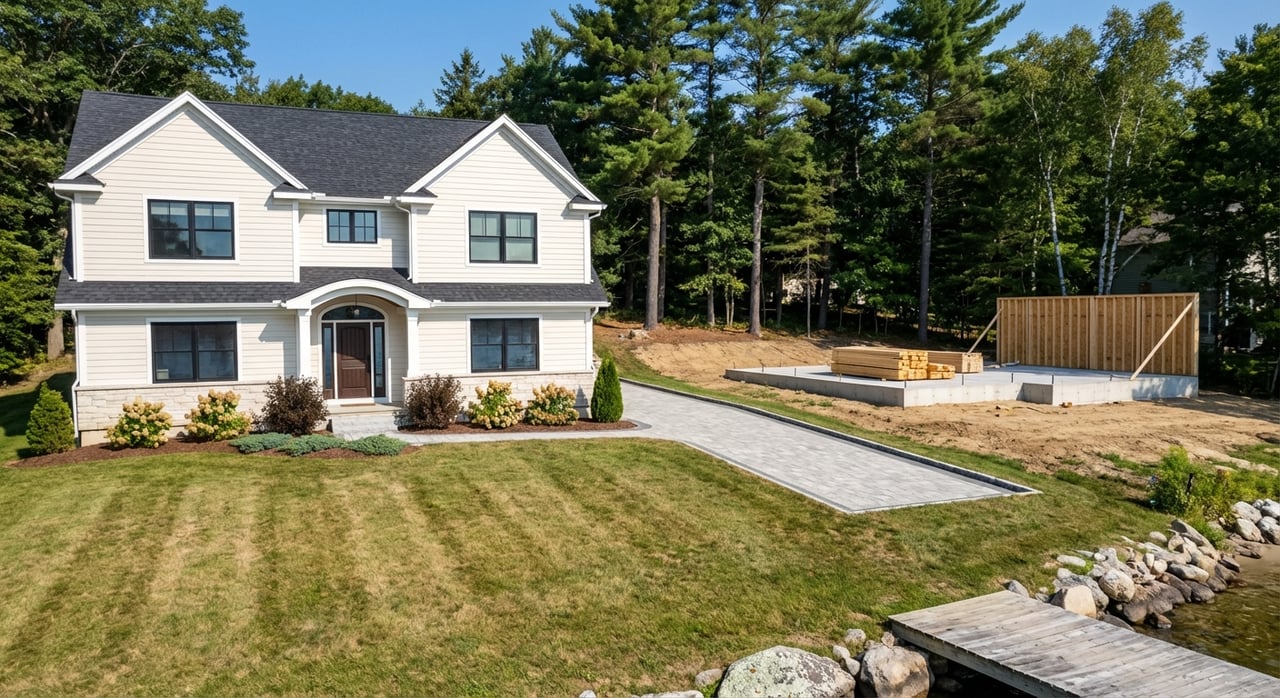
Torn between building your dream lake house or buying an existing cabin on the Whitefish Chain? You are not alone. In ZIP 56442, the choice often comes down to timelines, total cost, and what shoreland rules allow on a given lot. This guide gives you clear numbers, key regulations, and practical next steps so you can make a confident decision for your Crosslake lifestyle. Let’s dive in.
Whitefish Chain snapshot
The Whitefish Chain is a connected system of more than a dozen lakes, including Upper and Lower Whitefish, Cross Lake, Rush, and Big Trout. For a quick overview of lake connections and local FAQs, start with the Chain’s own resource hub at the Whitefish Chain FAQs. Local stewardship is strong, with active water quality and aquatic invasive species efforts through partners and lake associations.
Buying an existing lake home
Speed and certainty
If you want to be on the water for the next boating season, buying an existing home is usually the fastest route. Typical transactions close in roughly 30 to 45 days with conventional financing, depending on appraisal, inspections, and title. You can often move in right after closing if the septic and title are in order.
Inventory and prices
Inventory varies by lake and season. In 56442, non‑waterfront homes often list in the mid hundreds of thousands, while most waterfront homes trend higher and can exceed one million for premium locations or updated finishes. Price depends on frontage quality, lake identity, views, and the home’s condition.
Septic and compliance checks
In Crow Wing County, septic compliance records are a common requirement for land transfers and for building permits. Before you fall in love with a cabin, ask for a current Certificate of Compliance or budget for an upgrade. The county’s permit portal outlines what you need for septic, land‑use, and shoreland permits on the Crow Wing County Permit Information page.
Building new on the Chain
Lots and pricing today
Buildable waterfront lots on the Whitefish Chain are limited, and pricing spans a wide band based on frontage, water depth, and setting. As examples, one recent listing showed about 6.46 acres with roughly 800 feet on Little Pine Lake near the mid $300k range on this Little Pine Lake parcel, while a roughly 1‑acre lot with frontage on Lower Whitefish was noted around $199k on this Lower Whitefish lot example. Prime, sandy, open‑water frontage on flagship lakes can command a premium, and vacant options are scarce, which is why some buyers target older cabins as tear‑downs.
Build timeline in 56442
Custom lake homes take time. National data shows single‑family builds commonly run around 8 to 12 months from permit to completion, with custom and northern‑climate projects on the longer end. In Crosslake, a realistic window is about 12 to 18 months from lot purchase to move‑in, especially when you account for design, permitting, and seasonal pauses. For national timeline context, review the NAHB analysis summarized by ProBuilder.
Here is the typical sequence you can expect locally:
- Pre‑purchase due diligence, 2 to 6 weeks: survey, soil tests, septic feasibility, shoreline review, and a county pre‑application as needed. See submittal guidance and checklists in the Crow Wing County permit portal.
- Design and permitting, 1 to 4 months: architectural plans, septic design, shoreland and land‑use permits, and any DNR coordination if work touches the water.
- Site prep and infrastructure, 2 to 8 weeks: tree clearing within rules, grading, driveway, foundation, utilities, and septic install.
- Construction, 7 to 12+ months: custom homes often take longer due to site complexity and high‑end finishes.
Shoreland rules that shape your plan
Where and how you can build is set by Minnesota shoreland rules and Crow Wing County’s Land Use Ordinance. State rules define minimum structure setbacks from the ordinary high‑water level that vary by lake class: General Development often 75 feet, Recreational Development about 100 feet, and Natural Environment about 150 feet. View the full state framework in Minnesota Rules 6120.
Crow Wing County enforces those setbacks and also requires vegetation buffers on riparian lots. The ordinance calls for a no‑mow, native shoreline buffer across most of the shore area, with minimum widths that vary by lake class, such as 10 feet on General and Recreational Development lakes and 25 feet on Natural Environment lakes. Review the current standards in the county’s Land Use Ordinance. The takeaway is simple. Your buildable footprint is often smaller than your plat suggests, and you will likely need a vegetation plan with your application.
In‑water work and docks
If your project involves riprap, dredging, or placing fill below the ordinary high‑water level, you may need a public waters work permit from the Minnesota DNR. Many seasonal docks that meet basic criteria do not need a DNR permit, but they still must follow local zoning. Always verify both with the county and the DNR using this DNR permit guidance.
Systems and site costs
Beyond the home itself, plan for septic, well, driveway, grading, and shoreline compliance. Septic systems can range from a few thousand dollars for simple gravity setups to more than $20,000 for engineered systems on challenging soils. For a quick cost primer, see this septic cost overview. Demolition, if you buy to rebuild, often falls in the thousands to tens of thousands depending on size and complexity. Review ranges in this demolition cost guide.
Cost comparison at a glance
Here are broad, research‑anchored ranges to help you frame the decision. Your actual budget should rely on local bids and a site‑specific plan.
- Construction cost per square foot: standard Midwest builds often center around the low to mid $100s per square foot, while custom lake homes commonly run $200 to $400+ per square foot depending on design, finishes, and site complexity. See national context in this new construction cost overview.
- Site and infrastructure allowances to consider: septic design and install, well, driveway and grading, shoreline mitigation and planting plans, permits and professional fees, and dock or lift. Septic and demolition ranges are summarized above, and well and dock costs vary widely by depth, shoreline, and equipment.
Three simplified scenarios illustrate how totals can stack up:
- Scenario A — Buy an older lakeshore cabin and lightly renovate: purchase around $450,000, plus $50,000 to $150,000 in updates. Total roughly $500,000 to $600,000, with closing in about 30 to 60 days in many cases.
- Scenario B — Buy a lot and build a 2,200 sq ft mid‑range home: lot around $250,000, construction at about $165 per sq ft comes to roughly $363,000, plus $40,000 to $120,000 for septic, well, dock, and site work. Total roughly $653,000 to $733,000, not including landscaping or contingencies.
- Scenario C — Tear down and rebuild a high‑end 2,800 sq ft custom: demolition $10,000 to $30,000, construction $300+ per sq ft near $840,000, plus $75,000 to $200,000 in site and systems. Total often $925,000 to $1.1M or more.
These are not quotes. They are starting points to help you compare an all‑in custom build budget with finished homes trading on the same lake.
Buy vs build checklist
Use this quick list to pressure‑test your plan before you write an offer.
- Confirm lake class and setbacks. The lake’s classification sets minimum setbacks and buffer expectations. Review state shoreland rules in Minnesota Rules 6120 and verify parcel specifics in the county’s Land Use Ordinance.
- Verify septic status. Ask for a current Certificate of Compliance or budget time and funds for design and replacement. Start with the county’s permit and septic guidance.
- Order feasibility checks early. For build or rebuild, line up survey, soil tests, and utility availability, and discuss shoreline restoration or mitigation plans with the county. Use the permit portal to understand submittals.
- Set a realistic timeline. Buying and light renovation is fastest. Custom builds commonly take 12 to 18 months here. For national trends, see the ProBuilder timeline summary.
- Compare total all‑in costs. Price the full package, including land, construction, site work, permits, contingencies, and shoreline compliance, then compare it to finished homes on the same or adjacent lakes. Scarce premium frontage can make a teardown plus rebuild competitive with searching for a vacant lot.
Which path fits you
Choose buying if you want to be on the water soon, prefer predictable costs, and find a home that fits most of your wishlist. Choose building if you have a specific design vision, can wait a season or more, and are ready to navigate shoreland standards to tailor the home and site.
Either path benefits from early due diligence. In Crosslake, the right sequence is to confirm what the shoreland rules allow on your parcel, lock in septic feasibility, and build your budget with local bids before you commit to a design or a closing date.
Your next step on the Whitefish Chain
If you are weighing a purchase, a remodel, or a ground‑up build, you deserve clear guidance and a local plan that fits your timeline. Tap our deep roots on the Chain, early‑access buyer strategies, and concierge‑level support to move forward with confidence. Ready to begin? Schedule a Lakeside Consultation with the Pederson Team.
FAQs
What shoreland setbacks apply on the Whitefish Chain in Crow Wing County?
- Minnesota sets minimum structure setbacks by lake class, often 75 feet for General Development, about 100 feet for Recreational Development, and about 150 feet for Natural Environment lakes. Confirm your parcel’s specifics in Minnesota Rules 6120 and the county Land Use Ordinance.
How long does a custom lakeshore build take in Crosslake, MN?
- Plan about 12 to 18 months from lot purchase to move‑in for a custom home, with national averages around 8 to 12 months from permit to completion. See timing context in this ProBuilder summary.
Do I need a permit for docks or shoreline work in Minnesota?
- Many seasonal docks that meet basic criteria do not need a DNR permit, but riprap, dredging, or fill below the ordinary high‑water level often does. Verify requirements with the DNR permit guidance and Crow Wing County.
What septic rules apply when buying an older lakeshore cabin in 56442?
- Crow Wing County often requires septic compliance documentation at transfer and for building permits. Ask for a current Certificate of Compliance or plan for design and replacement per the county’s permit and septic page.
Are buildable waterfront lots available on the Whitefish Chain?
- Yes, but supply is limited and prices vary widely by frontage and lake. Recent examples include a multi‑acre Little Pine Lake tract on LandSearch and a Lower Whitefish frontage lot on Land.com.